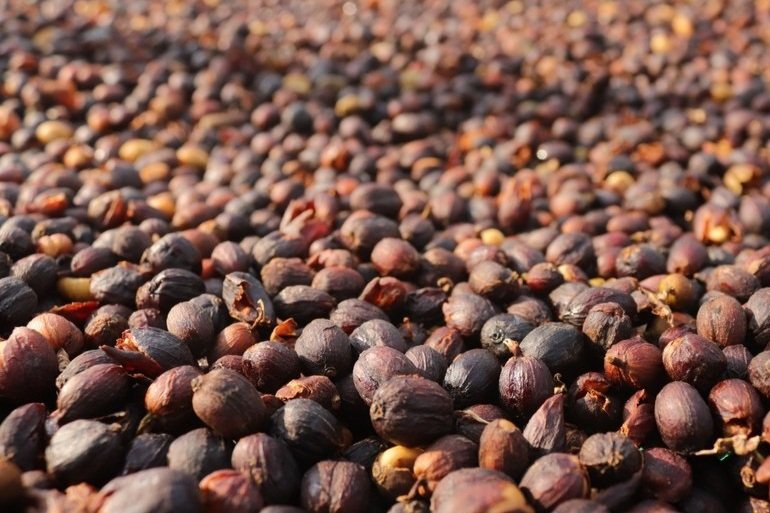
Our 100% Kona Coffee, From Seed to Cup
Grown with care. Processed with intention. Roasted by our family.
Discover estate-grown 100% Kona coffee from our family farm in South Kona, Hawaiʻi. From our trees to your cup, we bring together the care of the grower, the craft of the processor, and the attention of the roaster.
Explore our Washed, Honey, and Natural processing methods, and find the expression of Kona that speaks to your taste.
Rooted in South Kona. Cared for by our family.
Aloha Star is our family’s commitment to sharing the coffee we grow with the people who enjoy it. Since 2013, we have nurtured our coffee in South Kona, Hawaiʻi, caring for its journey from seed to cup.
Every coffee we sell is grown on our farm. We hand-pick, process, mill, sort, small-batch roast, package, and ship it ourselves—keeping a direct connection between our land, our work, and your cup.
This is estate-grown 100% Kona coffee, not a Kona blend. It is coffee with a known origin and a family behind every bag.
Our Brand
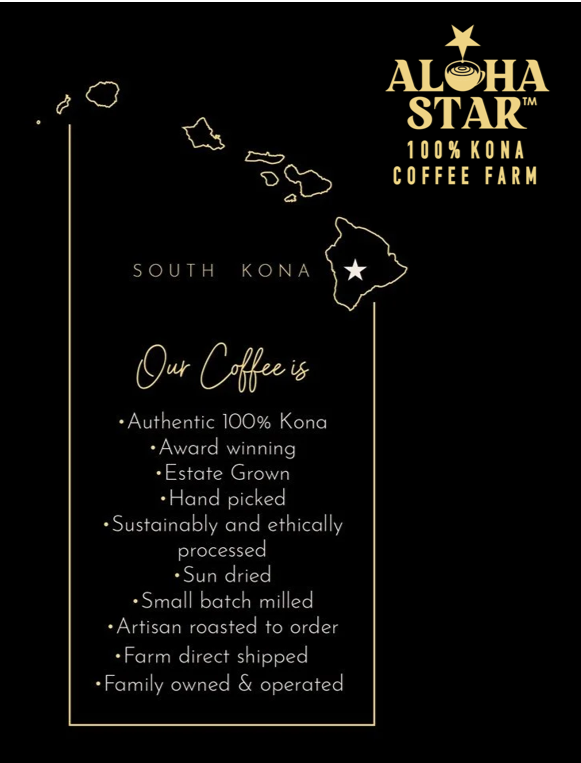
Grown in South Kona, Hawaiʻi. Cared for by our family, from seed to cup.
We are proud members of the Kona Coffee Farmers Association (KCFA), the Hawaii Coffee Association (HCA), and the Specialty Coffee Association—US Chapter.

Our Quality-Oriented and Sustainable Production Cycle
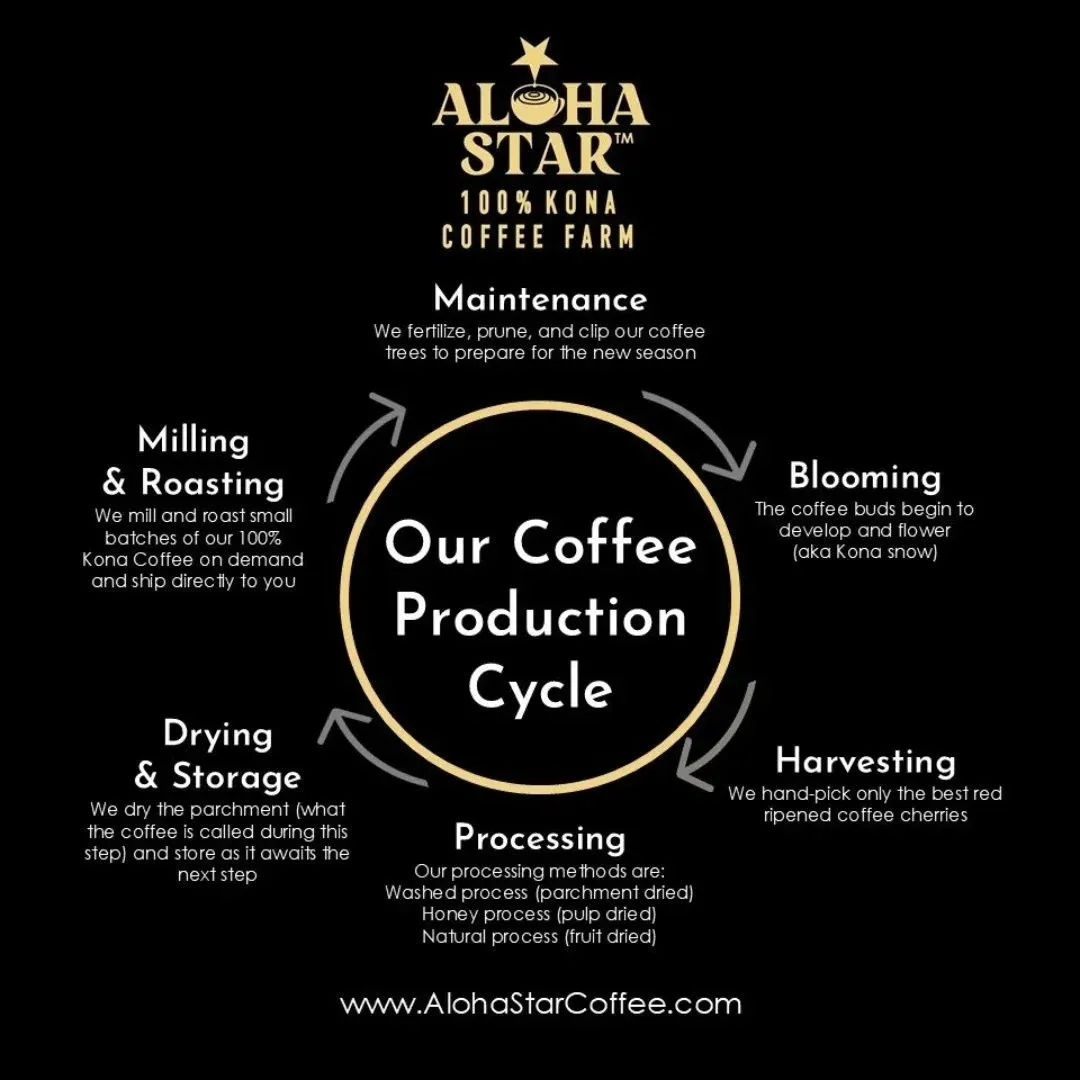
As an Estate farm, we carefully manage all stages of the production cycle to ensure that we comply with the highest quality standards for specialty-grade Kona coffee, while employing sustainable and eco-friendly farming practices. From seedling, growing, harvesting, processing, drying, milling, grading/sorting, roasting, to packing and shipping; providing you a complete “farm to cup” experience.
Our Processing Methods
Wet/Washed Process (Parchment - dried)
The Classic Kona coffee Processing Method
The Wet/Washed (parchment dried) process, consists of completely removing the cherry and the mucilage from the outside of the parchment layer, with the objective of leaving only the flavor the is developed “per se” by the coffee beans.


Honey Process (Pulp - dried)
Our Best-Selling Processing Method
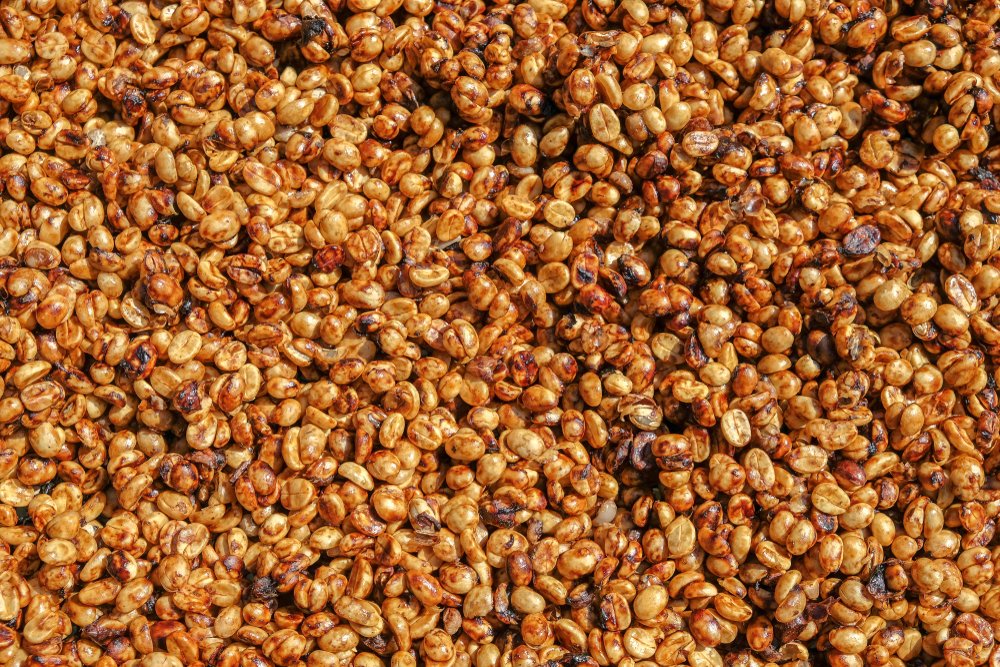
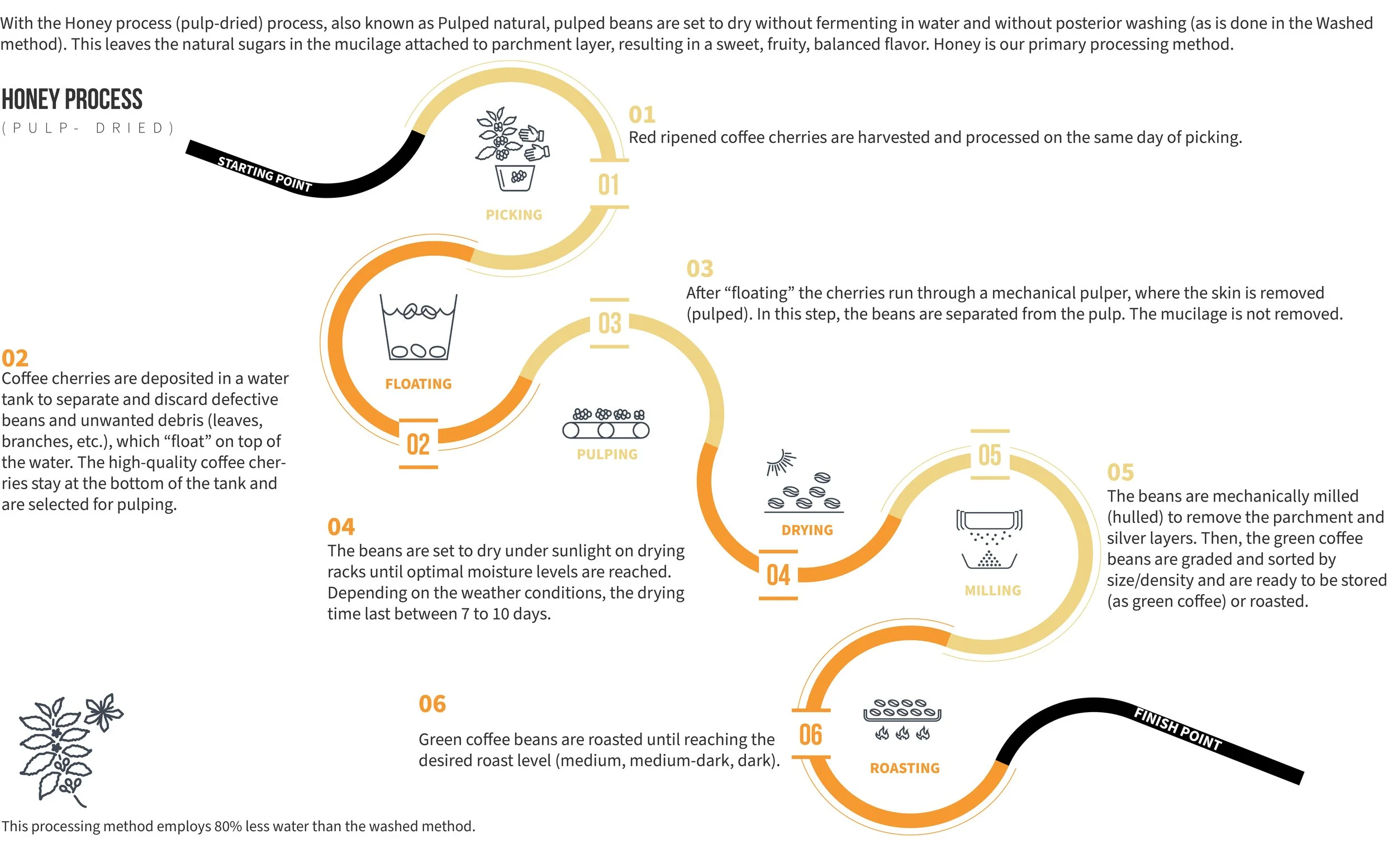
With the Honey process, after the beans are pulped, instead of placing them in a fermentation tank, as is done with the “Washed” method, to remove any mucilage (fruit pulp) that is still stuck to the parchment layer around the beans, we set the beans to dry leaving the natural sugars contained in the mucilage attached to parchment layer. The results are a sweeter, fruity, balanced flavor.
Dry/Natural (Fruit-dried)
Intense Fruity Flavor Notes
With the Natural process, the coffee beans are set to dry without pulping (removal of the red skin). After picking, the coffee cherries are dumped in a water tank just to remove the "floaters" (immature/over ripened/leaves/branches, etc.) and then are set to dry on elevated beds (drying racks). It takes about three weeks for the beans to dry, depending on the weather. Then the outer skin and parchment layers are removed before roasting.